Medical Answering Service: Costs, Coverage and AI Options

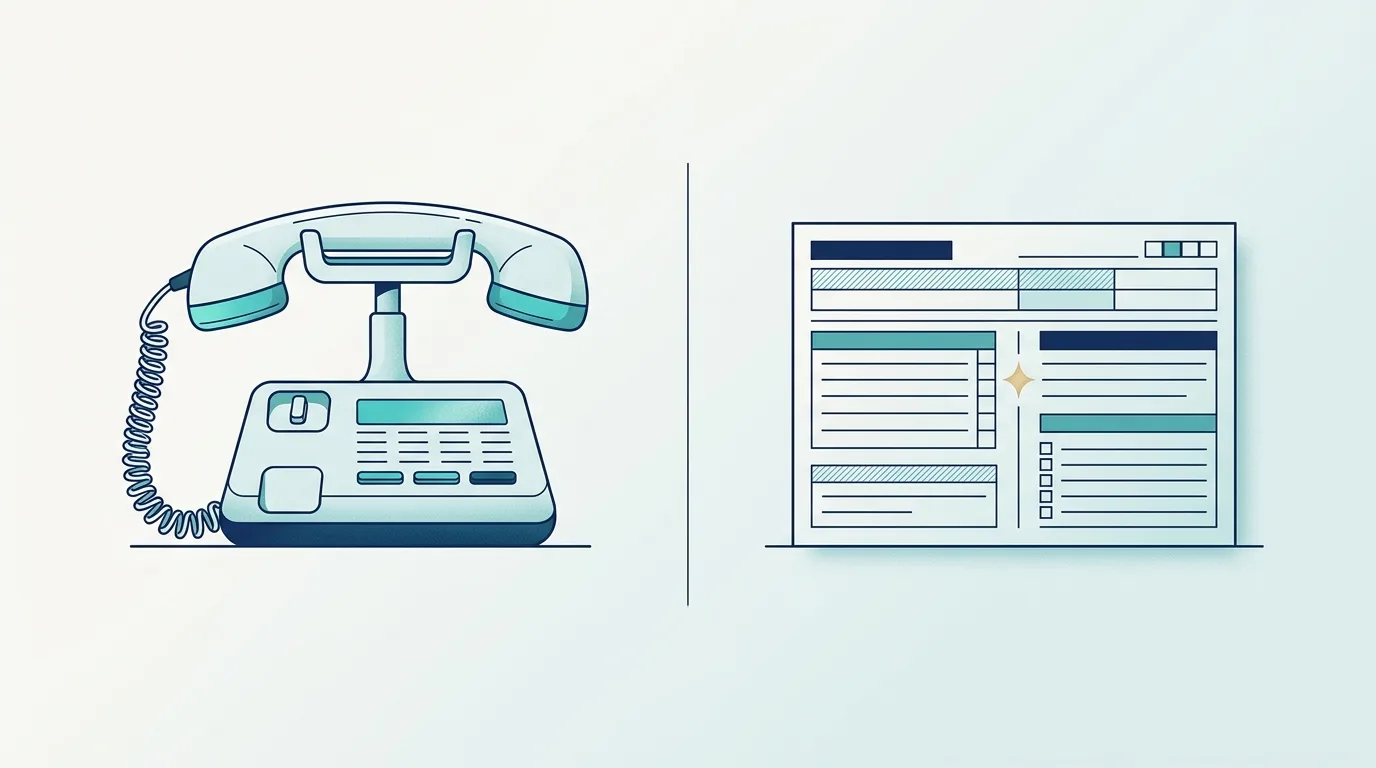
A medical answering service handles calls when clinic staff cannot. Human, AI, and hybrid options differ in booking, escalation, integrations, pricing, and evidence. Choose based on the workflow each service can complete, the fallback when it fails, and the staff work it leaves behind.
The useful comparison is not simply who answers. It is what happens next. A provider may take a message, transfer a caller, prepare an appointment request, schedule through approved access, or complete a structured handoff. Those are different workflows with different operational and legal requirements.
What is a medical answering service?
A medical answering service handles calls when clinic staff are unavailable, using human agents, AI, or a hybrid coverage model.
A medical answering service provides after-hours, overflow, or business-continuity call coverage for a clinic. Depending on the provider, it may take messages, route calls, schedule appointments, collect approved administrative intake, or notify staff. The category includes human agents, AI receptionists, and hybrid services.
Administrative call handling is not clinical judgment. Urgent or clinical questions should follow the clinic's approved routing instructions and reach qualified staff. Capabilities vary by provider, workflow, integration, location, and tested access. A service description alone does not prove that the full workflow works.
How much does a medical answering service cost?
Medical answering service cost depends on coverage hours, call volume, tasks, integrations, transfers, setup, and staff oversight.
Common pricing models include per-minute, per-call, base plus usage, flat monthly, and custom enterprise plans. Each model can be reasonable for a different call pattern. A low base price may not be comparable with a quote that includes scheduling, multiple locations, reporting, or complex exception handling.
Ask about setup, holiday, bilingual, transfer, integration, overage, and minimum-volume fees. Normalize every written quote to the same coverage hours, tasks, locations, call volume, and fallback requirements. Do not treat an unscoped monthly figure as a complete cost comparison.
Include staff rework in total cost. Callbacks, data entry, message correction, appointment verification, exception review, and failed-action recovery consume time even when the vendor's invoice looks low. The best financial comparison combines vendor fees with the work the service leaves behind.
What can a medical answering service handle?
Coverage can include overflow, after-hours calls, messages, scheduling, transfers, and staff handoffs, depending on the service.
Think of capability as a ladder: answer, take a message, route, schedule, collect approved intake, notify, and follow up. A provider may cover one step or several. The real buying unit is the completed workflow, not the answered call, because every incomplete step returns work to clinic staff.
- Answer: provide approved information and identify why the caller contacted the clinic.
- Message: capture accurate contact details and a staff-ready reason for the call.
- Route: transfer the caller or send the task to the correct owner.
- Schedule: create or prepare an appointment only through approved, tested access.
- Intake: collect only the administrative fields the clinic has approved.
- Notify: confirm that the right staff member received the task.
- Follow up: complete approved reminders or hand the next step to staff.
Urgent-call actions must follow clinic-approved instructions. A service should not invent urgency rules, provide clinical advice, or claim that a spoken appointment is confirmed when the authoritative scheduling system shows no booking. The system record and completed handoff are the evidence.
Human, AI or hybrid: which coverage model fits?
Human, AI, and hybrid services differ in exception handling, booking access, pricing, consistency, and staff follow-up requirements.
| Decision area | Human service | AI receptionist | Hybrid model |
|---|---|---|---|
| Strongest fit | Exceptions, sensitive calls, flexible judgment | Repetitive approved workflows, availability, structured capture | Routine calls plus human exception handling |
| Common cost model | Per minute, per call, or agent plan | Subscription, usage, or custom plan | Base plan plus human or usage fees |
| Scheduling | Varies from messages to live scheduling | Depends on tested calendar or practice-system access | AI handles routine requests, humans handle exceptions |
| Consistency | Depends on staffing, training, and scripts | Depends on configuration, model behavior, and integrations | Depends on the routing and ownership between both layers |
| Main operational risk | Incomplete messages, queue delays, inconsistent agents | False confirmations, tool failures, loops, poor exception handling | Broken handoff between AI and human teams |
| Staff work left behind | Callbacks, data entry, follow-up, exception review | Exception review, correction, monitoring, failed-action recovery | Oversight of both systems and unresolved edge cases |
No model is always best. The right model depends on the workflows the clinic will delegate, the exceptions it expects, and the evidence each provider can produce. Compare the same scope and require a clear owner for every task that the service cannot complete.
Does a medical answering service need a BAA?
A BAA is required when a vendor is a HIPAA business associate handling PHI, but the agreement is not proof of safe operation.
The United States Department of Health and Human Services says a business associate is a person or entity that performs certain functions involving protected health information for a covered entity. The clinic must determine its status, the vendor's role, and whether PHI is created, received, maintained, or transmitted.
Review the vendor's BAA, permitted uses, subprocessors, incident terms, retention, deletion, access controls, and data-flow diagram. HHS explains the business-associate relationship and required written assurances in its business associate guidance.
A BAA allocates duties and provides assurances. It does not prove that booking, transfers, recordings, fallback, or deletion work as described. Verify operational behavior separately. This is not legal advice. Clinics should obtain advice for their jurisdiction, organization, contracts, and proposed data flow.
How should a clinic test a service before launch?
Test real calls, bookings, transfers, failures, and handoffs before launch. A polished demo does not prove the full workflow works.
Use real-phone testing when telephony is part of the service. For each scenario, verify the spoken answer, the authoritative system action, the transfer result, the notification, and the available audit evidence. A good transcript cannot compensate for a missing booking or failed handoff.
Test successful and failed paths: false booking, transfer to voicemail, no answer, API timeout, caller correction, hang-up, urgent routing, and staff handoff. Include the actual systems, coverage windows, caller types, and exception owners the clinic expects to use after launch.
Record each scenario in an acceptance scorecard with the caller goal, expected response, authoritative system action, transfer result, notification, evidence, fallback, owner, and final result. Do not rely on a fixed call count. Test enough normal and high-risk paths to support a limited launch decision.
- Pass: the response, system action, evidence, and handoff match the approved workflow.
- Hold: the result needs clarification, configuration, or another test before approval.
- Fail: the service gives a false confirmation, loses the task, breaks policy, or lacks a safe fallback.
When is call coverage enough?
Call coverage may be enough when missed calls are the main leak and every captured inquiry already has clear follow-up ownership.
Call coverage can be enough when the proven problem is access or availability. The clinic already has clear qualification, ownership, follow-up, and booking handoff. The selected service fits the approved workflow, produces the required evidence, and has a tested fallback when it cannot complete a task.
Not every clinic needs a broader workflow project. If missed calls and after-hours coverage are the measurable leak, compare the selected service with the clinic's existing staff process, then review Aida pricing and fit against the same scope.
When does the broader inquiry workflow need diagnosis?
Consult Capture belongs when inquiries are answered but still stall across qualification, follow-up, booking, or workflow visibility.
A broader diagnosis is useful when calls, forms, SMS, referrals, and ad leads arrive through different paths, ownership is unclear, or inquiries stall after the first response. Review qualification, follow-up, booking handoff, staff workload, system state, and reporting before choosing another tool.
The right next fix may be call coverage, staff workflow, CRM cleanup, reporting, AI automation, or no build. See the fuller AI receptionist versus Consult Capture decision, or review the workflow examples for plastic surgery and oral and maxillofacial surgery.
How do you choose a medical answering service?
Choose a service by matching each required workflow to evidence, fallback behavior, total cost, staff rework, and legal responsibilities.
- Measure the current state. Count call volume, missed calls, after-hours demand, callbacks, and staff rework.
- Define the boundary. Decide which workflows the service may complete and which stay with staff.
- Compare equal scopes. Review human, AI, and hybrid models against the same requirements.
- Review evidence. Check BAA and data-flow evidence where applicable.
- Test the real workflow. Verify calls, system actions, transfers, and failures.
- Limit the launch. Set fallback, monitoring, ownership, and rollback rules.
- Compare total cost. Include correction work, exceptions, oversight, and vendor fees.
Provider claims are inputs, not proof. Ask who owns each exception, where the authoritative record lives, how staff correct errors, and what happens during downtime. You can also review how Attainment works before requesting a workflow consultation.
Key takeaways
Medical answering services solve call coverage. The best choice depends on completed workflows, proven fallback, staff rework, and total cost.
- A medical answering service is a category, not one fixed service model.
- Human, AI, and hybrid options have different strengths and risks.
- Pricing must be normalized to the same scope.
- A BAA does not prove operational readiness.
- A real-phone acceptance test should verify authoritative system state.
- Call coverage is enough only when the rest of the inquiry workflow is clear.
Frequently asked questions
These answers cover cost, BAA evidence, booking, AI options, after-hours coverage, transfers, staff rework, and selection.
What is a medical answering service?
A medical answering service handles calls when clinic staff are unavailable or overloaded. Depending on the provider, it may take messages, route calls, schedule appointments, collect approved intake information, or send staff notifications. Services may use human agents, AI, or a hybrid model.
How much does a medical answering service cost?
Cost depends on coverage hours, call volume, locations, tasks, transfers, integrations, languages, setup, and overages. Compare written quotes using the same scope. Include callback work, data entry, corrections, and exception handling when calculating total cost.
Does a medical answering service need a BAA?
A BAA is generally required when a vendor is a HIPAA business associate that creates, receives, maintains, or transmits protected health information for a covered entity. Confirm the clinic's status, vendor role, subprocessors, and data flow. A signed BAA does not prove the workflow operates safely.
Can a medical answering service schedule appointments?
Some can and some cannot. Human services may schedule through approved access or only take messages. AI services may use calendar or practice-system integrations. Test the actual workflow and verify the authoritative appointment record before treating a spoken confirmation as success.
Is an AI receptionist better than a human answering service?
Neither model is always better. AI can handle repetitive approved workflows with consistent availability. Human agents may handle exceptions and sensitive conversations more flexibly. A hybrid model can combine both, but only if routing, ownership, and fallback are clear.
How should a clinic test a medical answering service?
Test real calls, scheduling, transfers, voicemail, no answer, corrections, system outages, caller hang-ups, urgent routing, and staff handoffs. Review the recording where lawful, transcript, system action, transfer result, notification, and audit trail before approving a limited launch.

Founder & CEO, Attainment
David Cyrus is the founder of Attainment. He writes about missed revenue, manual work, AI automation, and the operating decisions behind what to fix first.
Connect on LinkedInFind the Problem Worth Fixing First
Tell us where revenue, follow-up, or staff time is getting stuck. We will help you decide whether the problem is measurable and worth fixing.