SaaS Has Traffic and Demos but No Conversions? Fix the Workflow

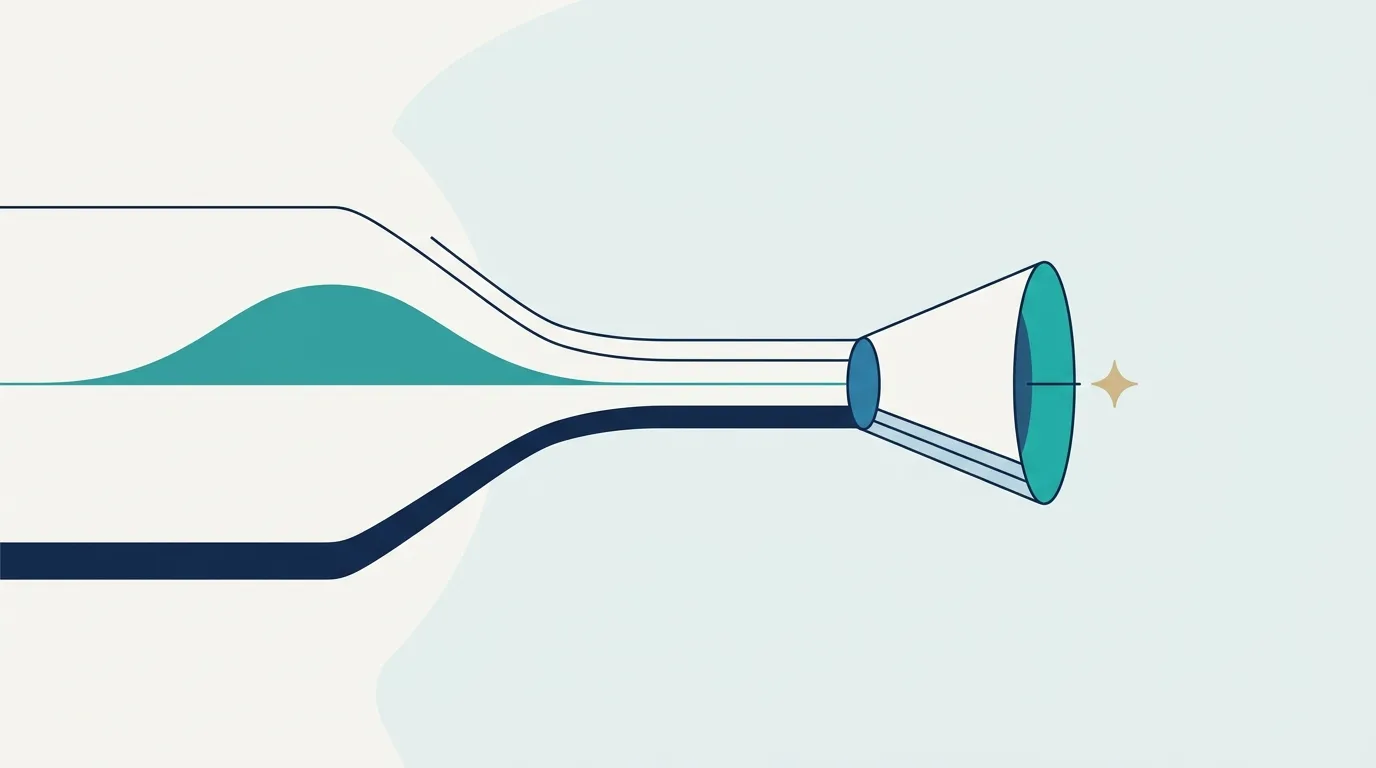
If your software-as-a-service product gets traffic and demos but few conversions, the constraint is not volume. It is the positioning-to-conversion workflow that fails to tell qualified buyers why to act.
Most founder-led software-as-a-service companies do not have a traffic problem or a demo problem. They have a conversion problem that hides between the two. Qualified people arrive, take a demo, and do not buy, because the workflow that connects positioning to conversion does not give them a clear reason to act now.
The reflex is to add more: more ads, more content, more demos. Business-to-business buying says that rarely works. According to Gartner, buyers spend only 17 percent of the journey meeting with all suppliers combined, so most of the decision happens in your messaging and assets, not in the demo. If those do not make the case, more demos just feed the same leak.
Why does my SaaS get demos but not conversions?
Software-as-a-service products get demos but not conversions when the positioning does not survive the gap between the demo and the decision. The prospect understood the product in the room, then could not re-explain its value to themselves or their team afterward. The demo created interest; the positioning failed to convert it into a reason to act.
This is a workflow gap, not a sales-talent gap. The path from first message to signed plan loses qualified interest at predictable handoffs: the landing page promises one thing, the demo shows another, and the follow-up assumes an urgency the buyer never felt.
What is the positioning-to-conversion workflow?
The positioning-to-conversion workflow is the connected path from how you describe the product to how a qualified buyer decides to act. It aligns the landing page, the demo, and the follow-up around one consistent reason to buy, so interest does not leak between steps. It is one workflow, fixed in one pass, not five disconnected assets.
A working positioning-to-conversion workflow does four things:
- States one clear position a buyer can repeat to their team without you in the room.
- Aligns the demo to that position, so the product proves the promise instead of touring features.
- Gives a reason to act now, grounded in the buyer's cost of waiting, not invented urgency.
- Follows up fast and specifically, because speed compounds: Harvard Business Review found a within-an-hour response made qualification nearly seven times more likely than waiting even an hour longer.
Where does a SaaS funnel lose qualified interest?
A software-as-a-service funnel loses qualified interest at the seams between assets, not inside any one asset. The landing page, the demo, and the follow-up are usually built by different people at different times, so they tell slightly different stories. The buyer feels the inconsistency as doubt, and doubt converts to let me think about it.
| Seam | What leaks | The fix |
|---|---|---|
| Ad or search to landing page | Promise mismatch | One position, stated the same way |
| Landing page to demo | Feature tour instead of proof | Demo aligned to the position |
| Demo to follow-up | No reason to act now | Cost-of-waiting framing |
| Follow-up to decision | Slow, generic outreach | Fast, specific, buyer-owned next step |
How do I tell if positioning or product is the problem?
You can tell it is positioning, not product, when demos go well and deals still stall. If prospects are engaged in the room and then go quiet, they understood the product but could not justify the decision afterward. That is a positioning-to-conversion gap. If prospects do not show up or churn immediately after buying, that points elsewhere, to demand or product fit.
What Attainment does here, and what it does not
Attainment diagnoses where the positioning-to-conversion workflow loses qualified interest: the position itself, the demo alignment, the reason to act, and the follow-up. Then we decide whether there is a measurable gap worth fixing before building anything.
What we do not do: we do not guarantee monthly recurring revenue, we do not promise reduced churn, and we do not claim multiples of growth. We fix the workflow in one pass, with AI automation supporting follow-up and asset drafting, while your team owns the product and the customer.
Key takeaways
- Traffic and demos are rarely the constraint; conversion between them is.
- Gartner: buyers spend only 17 percent of the journey with suppliers, so your assets must carry the case.
- The leak lives at the seams between landing page, demo, and follow-up.
- Fix it as one positioning-to-conversion workflow, not five separate assets.
- Harvard Business Review: a one-hour follow-up makes qualification nearly seven times more likely.
- The first decision is whether the gap is measurable and worth fixing.
The first step
The first decision is not whether to build. It is whether your funnel is leaking enough qualified interest to be worth fixing. The diagnostic shows whether there is a measurable gap. If there is no measurable gap, we do not pitch the build.
Before you buy more traffic or run more demos, find out where qualified interest is leaking between them.
Further reading: AI operations and growth systems for B2B SaaS companies, the message hierarchy that lets buyers repeat the value without you, and how proof and education carry a trust-heavy sale.
Frequently asked questions
What is SaaS positioning?
It is how a software-as-a-service product describes who it is for and why it is worth buying, stated so a buyer can repeat it to their team. Weak positioning loses qualified interest between the demo and the decision.
Why do SaaS demos not convert?
Usually because positioning does not survive after the demo. The buyer understood the product in the room but could not justify the decision later, so interest cooled into "let me think about it."
Is this a sales problem or a marketing problem?
Neither in isolation. It is a workflow problem across the seams between the landing page, demo, and follow-up. Fixing one asset without the others leaves the leak in place.
How fast should we follow up after a demo?
Fast. Harvard Business Review found a within-an-hour response made qualification nearly seven times more likely than waiting even an hour longer.
Does Attainment guarantee revenue growth?
No. We diagnose and fix the positioning-to-conversion workflow. We do not guarantee monthly recurring revenue, churn reduction, or growth multiples.

Founder & CEO, Attainment
David Cyrus is the founder of Attainment. He writes about missed revenue, manual work, AI automation, and the operating decisions behind what to fix first.
Connect on LinkedInFind the Problem Worth Fixing First
Tell us where revenue, follow-up, or staff time is getting stuck. We will help you decide whether the problem is measurable and worth fixing.